
Stability Running Shoes
In the list below you will find the stable running shoes that we have already reviewed. Runners’ (and non-runners’) feet are not perfectly perpendicular to the ground. Either the ankle leans inwards (pronals) or outwards (supinals). Minor deviations of less than 10% are not usually a problem, but if the deviation is greater than this, it is worth correcting the deviation. Stable running shoes are a symptomatic solution to prevent running injuries over shorter and longer distances, but it is important to understand why the larger than normal deviation has developed and to work to correct it.
In the list below stable running shoes, we also write in detail about ankle drop, improper foot positioning, and ankle drop and flat feet, because although the 3 things often go together, they are not the same.
Showing 1–12 of 33 results


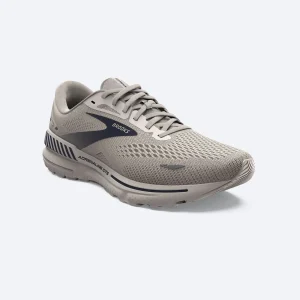

First of all, it’s important to clarify the difference between improper foot position, ankle drop and flat feet, because stable running shoes can help with improper foot position.
- A ankle drop is a condition where the angle between the ankle and the foot is greater than normal. It is often associated with, but not identical to, pronating foot position. Ankle drop is usually caused by joint weakness or imbalance in the muscles of the foot.
- A foot drop is a condition in which the arch of the foot is lowered or completely removed, resulting in increased contact with the ground. It is often associated with pronation of the foot, but flatfoot alone does not automatically mean pronation.
- The pronating foot position refers to the movement of the foot when the centre of gravity is shifted to the inside of the foot during support.
In all three cases, the symptoms can be alleviated with insoles and stable running shoes, but this will not cure the problem.
The cure is proper exercise, strengthening. By strengthening the right muscles, all three symptoms can be alleviated or cured.
Some studies have also shown that insoles, heavily supported by stable shoes, weaken even more the muscles that need to be strengthened to put the incorrect foot position in place, so have the opposite effect in the long run.
There are still situations when it makes sense to buy more stable or stable running shoes.
For one thing, the effects of strengthening exercises to correct improper foot positioning don’t happen immediately, they take months to take effect, and if you want to run in the meantime, a stable running shoe is a good idea.
On the other hand, during a longer run your muscles do not tire at the same time and in the same way, so your foot position is completely different after 1 km of running compared to 21 km. A good running shoe designed for long distance running needs to be stable enough to correct for this fatigue, according to a Nike study.
It’s also important to consider that if you don’t have good foot positioning, your running shoes will wear out completely differently. It’s not (just) about visible marks, so it’s not about even wear on the outsole, but about the midfoot collapsing. If you pronate your foot position, the foam of the midsole of your running shoes will collapse more on the inner arch than on the outer arch, which will cause your ankle to lean inwards even more, leading to running injuries more quickly. In a supination case, the same happens in the opposite direction.
The inner or outer arch of the midsole of stable running shoes is harder and better supported, so they won’t lean in or out after hundreds of miles.